
Sedalia, Colorado · Garbage disposals
24/7 Emergency Line Open
Garbage Disposals in Sedalia, CO: Jams, Leaks, Humming and Replacement
A disposal that hums, leaks or backs up the sink is a daily nuisance. This page explains what each symptom usually means, what you can safely check, and when a replacement saves more trouble than another repair.
- Licensed and insured plumbers
- Same-day service when available
- 24/7 emergency dispatch
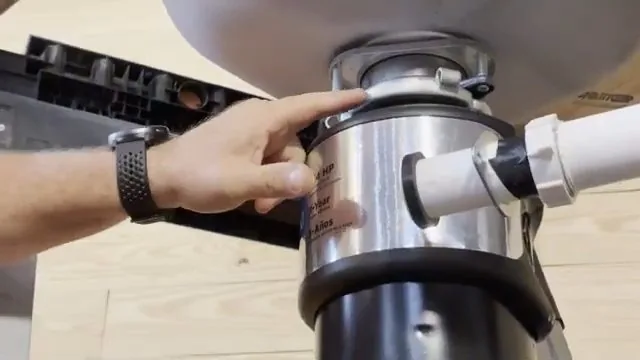
Garbage disposal repair: humming, jammed, slow or silent
A garbage disposal grinds food waste with a spinning plate, and the symptoms point to the cause. A disposal that hums but does not spin is jammed. A disposal that does nothing at all has no power, has tripped its reset or has a failed motor. A disposal that drains slowly has a partial clog in the trap or the line beyond it, and one that smells has food residue clinging inside the chamber.
| Symptom | Likely cause | What helps |
|---|---|---|
| Hums but will not spin | A jam, often a bone or fruit pit | Turn the plate by hand with a hex key, then press reset |
| Completely dead | Tripped reset or a breaker, or a failed motor | Press the reset button, check the breaker, then call |
| Slow draining or backing up | Clog in the trap or branch line | A plumber clears the trap and line |
| Smells even when empty | Residue on the chamber walls | Clean and flush; check the baffle |
| Leaks underneath | Loose seal, cracked housing or a worn drain connection | Tighten or replace the failed part |
A jam often clears with a hex key in the socket at the bottom of the unit, turning it back and forth until the plate moves freely. Press the red reset button on the bottom afterward. If it trips again, the motor may be failing.
Disposal installation and replacement
Replacement is the better choice when the unit leaks from its housing, when the motor is failing, or when repairs have become routine. A plumber disconnects the drain and the dishwasher line, removes the old unit from its mounting ring, and installs a new one. The mounting assembly is checked and replaced if worn, since a loose mount causes leaks and vibration. Power is connected to the existing circuit or a new cord is fitted, and the drain and dishwasher connections are tested before the unit is run.
Choose a horsepower and construction that suit how you cook. A larger motor handles tougher waste and jams less, and a continuous-feed unit is the familiar standard. Ask for a quote that names the model, the mounting hardware and what happens to the old unit.
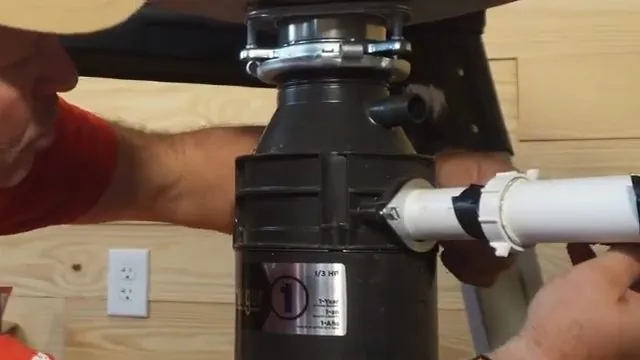
Disposal leaking or stuck?
Turn off the switch and call dispatch. A plumber serving your area can tell you whether it needs a repair or a new unit.
Leaks under the sink
Water in the cabinet under a disposal has a handful of sources. The sink flange and its putty or gasket seal where the unit meets the sink, the housing seam can crack with age, the drain elbow can loosen, and the dishwasher drain hose can come off or split. To find it, dry the cabinet, wipe the unit and the pipes and run water while watching where droplets form. Leaks at the flange or the elbow are usually repairs. A leak from the body itself means the unit has failed.
The fixture repair page covers the faucet, supply lines and drain parts around it, which often leak at the same time.
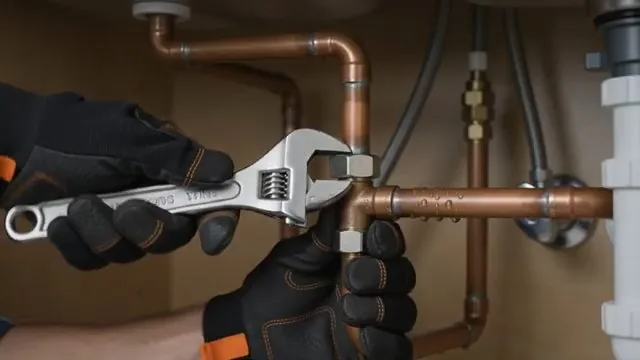
Clogs, backups and the dishwasher connection
When a disposal is full and the sink will not drain, the clog is in the trap or the line beyond it. Running the unit does not clear it and can make it worse. Kitchen sink drains collect grease, which cools and coats the pipe, so a clog that returns often calls for the line to be cleaned with a machine rather than a plunger. The drain cleaning page explains cable and jetting options.
The dishwasher drains into the disposal or the sink tailpiece, and a blocked disposal can send dishwasher water into the sink. Clear the knockout plug when you install a new unit if it connects to a dishwasher, since a plug left in place stops the dishwasher from draining. If the dishwasher fills the sink, check the disposal and the air gap or high loop on the hose before assuming the dishwasher is at fault.
What to put down a disposal, and what not to
A disposal is made for soft food waste in small amounts with plenty of cold water. It is not a trash can. The items below cause most of the clogs and jams plumbers see.
- Grease, oil and fat, which cool and coat the pipe.
- Coffee grounds and eggshells, which pack into the trap.
- Fibrous vegetables such as celery and corn husks.
- Pasta, rice and other starches that swell in water.
- Bones and fruit pits, which can jam the plate.
Run cold water before, during and for several seconds after use so waste is carried through the trap and into the main line rather than settling in the pipe. Cold water keeps grease firm enough to be chopped and flushed instead of liquefying and coating the pipes.
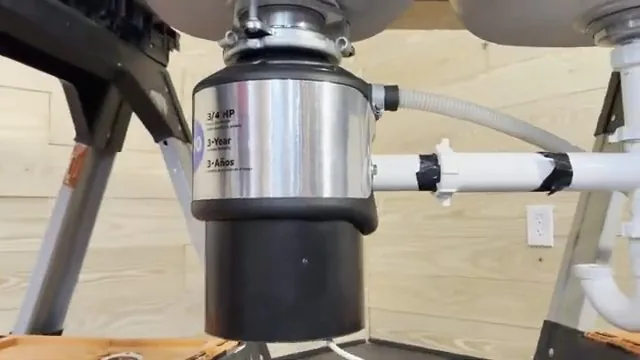
Before you call: three safe checks
Three checks take a few minutes and sometimes end the problem, and they tell dispatch what to expect. First, confirm the wall switch is on and the unit has power, since a tripped breaker or a switched-off outlet looks exactly like a dead motor. Second, press the red reset button on the bottom of the unit, which pops out when the motor overheats. Third, with the power off, look down into the chamber with a flashlight for a spoon, a bottle cap or a bone that has wedged against the plate. Remove anything you find with tongs, never your fingers.
If none of that helps, note what the unit does when you switch it on: silence, humming, a grinding noise or a leak. Describe that, along with the make and any model number on the label, when you reach dispatch. The plumber can then arrive with the likely part, and a visit that would otherwise need a return trip is more likely to be finished in one.
Garbage disposal questions
Why is my garbage disposal leaking?
Leaks come from the sink flange, the housing seam, the drain elbow or the dishwasher hose. A plumber can find which one by drying the cabinet and running water. A leak from the housing means the unit needs replacing.
Who fixes garbage disposals?
A plumber can repair or replace a disposal, including the drain and dishwasher connections. An electrician is needed only if new wiring is required, and a plumber can tell you if that is the case.
Should I repair or replace a disposal?
Repair a jam, a loose connection or a worn seal. Replace a unit with a cracked housing, a failing motor or repeated problems. The plumber can see which situation you have and explain it.
Why is my disposal humming but not spinning?
Humming means the motor has power but the plate is stuck. Switch it off, unplug it, turn the plate loose with a hex key in the bottom socket, and press the reset button. If it hums again, call a plumber.
Disposal trouble in the kitchen?
Dispatch answers around the clock. Say what the unit is doing, and a plumber serving your area will be arranged.
- Licensed and insured plumbers
- Same-day service when available
- 24/7 emergency dispatch