
Sedalia, Colorado · Water lines and pressure
24/7 Emergency Line Open
Water Line Repair and Replacement in Sedalia, CO: Main, Yard and Service Lines
A leak between the meter and the house can run unseen for weeks. This page explains the signs of a failing water line, where a homeowner's responsibility usually ends, and how replacement and pressure repairs work.
- Licensed and insured plumbers
- Same-day service when available
- 24/7 emergency dispatch
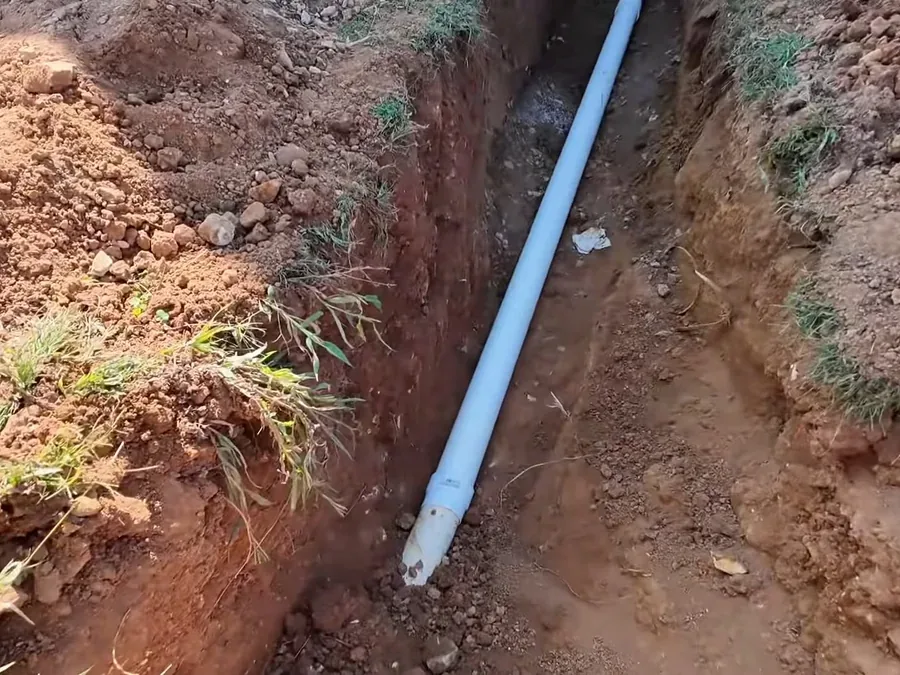
Water line repair: the signs of a failing line
The water line is the pipe that brings water from the utility's main to your house. When it leaks, the first signs are often indirect: a meter that keeps turning when every fixture is off, a wet patch or soft ground in the yard with no rain to explain it, a sudden drop in pressure, or a water bill that jumps without a change in use. Because most of the line is buried, you rarely see the break itself.
- The meter dial or low-flow indicator moves while all water use in the house is stopped.
- A wet, sunken or unusually green strip of yard between the meter and the house.
- Pressure that has fallen at every tap at once rather than at a single fixture.
- Running-water noise from a wall or floor while every fixture is closed, or a warm spot in the ground.
- Discolored water after a break or repair, caused by sediment stirred up in the line.
If you suspect a leak, close every fixture, read the meter, wait twenty minutes without using water and read it again. A change confirms water is moving somewhere. The tracing a leak explains how a plumber then narrows down where, and the water bill symptoms are covered there as well.
Service line or yard line: who is responsible for what
Responsibility depends on where the pipe sits. The utility owns the main in the street and normally the connection up to the meter. The homeowner owns the line from the meter to the house in most places, though the exact boundary varies, so confirm it with your water provider before you assume. The table shows the usual split and who to call.
| Part | Usually owned by | Who to call |
|---|---|---|
| Main in the street | The water utility | The utility |
| Connection and meter | The utility, with the shutoff at the meter | The utility |
| Service line, meter to house | Typically the homeowner; confirm with your provider | A plumber |
| Pressure regulator and house shutoff | The homeowner | A plumber |
The district's about page lists water as its main service and calls it a special district. The district's own presentation to the county calls the system old and undersized, with frequent main breaks, and proposes replacing it. You can read it in the presentation to Douglas County. That describes the district's mains, not your own pipe. If your pressure drops or water goes out for the whole street, call the district first. If the problem is on your side of the meter, call a plumber.
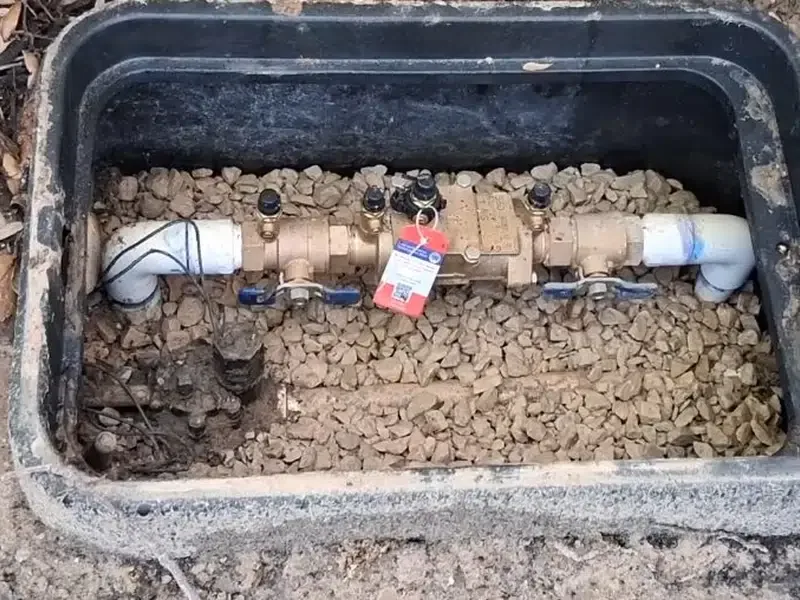
Water line leaking or pressure gone?
Call dispatch and say whether it affects the whole street or just your house. A plumber serving your area can tell you where the problem likely is.
Water line replacement and trenchless options
A line that has leaked more than once, or that is made of a material that is failing, is usually better replaced than patched. A plumber digs along the line, or, where conditions allow, draws new pipe along the route of the old one with a trenchless method that avoids a long open trench. The new line is pressure tested and the trench is backfilled, with the final grade and surface restored by whoever agreed to do it.
Before any digging, you or your contractor should call 811 in advance so buried utilities can be marked. The plumber normally handles this call. Depth also matters. The county's 36 inch minimum frost depth, noted in its design information, is a reminder that the ground freezes deep here, so ask where the new line will run and how deep it will sit.
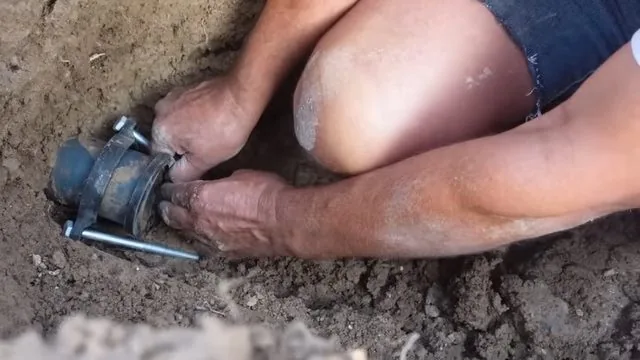
High and low water pressure
Pressure problems come in two forms with different causes. Low pressure usually points to a partly closed valve, a clogged fixture or aerator, a corroded pipe, a failing pressure regulator or a leak. High pressure is harder to notice and harder on the system, because it strains fittings, shortens the life of appliances and can cause faucets to drip or the water heater relief valve to discharge.
| What you notice | Likely cause | What a plumber checks |
|---|---|---|
| Weak flow at one tap | Clogged aerator or a failing cartridge | The fixture and its supply line |
| Weak flow everywhere | Partly closed main valve, corroded pipe or a leak | The main valve, the meter and the service line |
| Banging pipes or dripping taps | Pressure that is too high | A gauge at a hose bib and the pressure regulator |
| Swings in pressure | A failing pressure reducing valve | The valve and its setting |
A pressure reducing valve sits where the main enters the house and holds pressure to a safe level. When it fails, a replacement is a quick job in most cases.
Main shutoff valves, meters and pressure testing
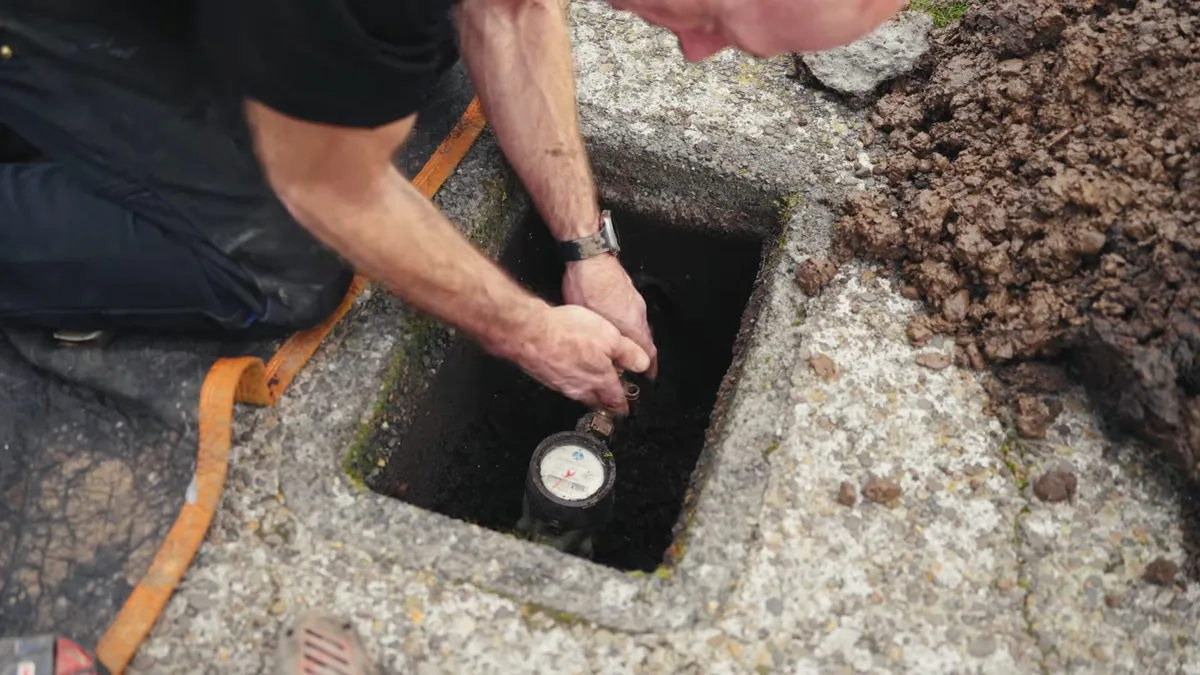
Every house needs a main shutoff that works. Find yours now, before an emergency, and turn it once to confirm it moves. A valve that is seized or leaks past its stem can be replaced, and doing it during a calm visit is far better than discovering the fault while water is pouring out. A plumber can also install a full-port ball valve that is easier to turn than an old gate valve. The meter belongs to the utility, so do not tamper with it, but you can read it, and a plumber can use it to test for leaks. After a repair, a pressure test of the line confirms it holds before the trench is closed.
Water line questions
Can a plumber clear a yard drain?
A plumber can clear the indoor drain lines and the cleanout that leads out of the house. Yard and surface drainage systems and sprinkler lines are a separate trade. Ask dispatch which one you have so the right person is sent.
Do old water service lines need replacing?
Some older service lines were made of materials that corrode or are no longer used for new work. A plumber can identify what your line is made of at the meter or where it enters the house, and say whether replacement is worth planning.
What if the main shutoff will not turn or the cold water is not flowing?
A stuck valve can sometimes be freed gently, but forcing it may break it. Call a plumber to replace it. If cold water is not flowing anywhere, check whether the street has an outage with the water district first.
Could a leak explain a high water bill?
Yes. A running toilet, a dripping fixture or a leak in the service line can all raise the bill. A meter check with all fixtures off shows whether water is moving, and a plumber can then find the source.
Water line trouble at your home?
Dispatch answers around the clock. Say where you see the problem and whether the main is off, and a plumber serving your area will be arranged.
- Licensed and insured plumbers
- Same-day service when available
- 24/7 emergency dispatch